Category: Portable Console

  • Handcrafted, One by One — From Soldering to Paint, Made by Real Humans

    Handcrafted, One by One — From Soldering to Paint, Made by Real Humans

    Built by Hands, Not Just Machines

    In a world of fully automated assembly lines, GAME POPS takes a different approach. Every unit is assembled by skilled technicians who carefully solder, inspect, and finish each console by hand. From circuit board to final polish, the process is intentionally human.

    “Handcrafted, One by One” is more than a slogan—it represents a commitment to quality and accountability. Each console passes through multiple workstations where real people, not just robotic arms, ensure that every connection is secure and every component performs as intended.

    Precision Soldering and Careful Assembly

    The journey begins with the motherboard. Technicians manually solder critical connection points to guarantee stability and durability. While automation assists with basic placement, final reinforcement and inspection are done by experienced hands trained to detect imperfections invisible to automated systems.

    Buttons, screens, and internal mounts are fitted with measured precision. Each handheld is tested for tactile feedback, ensuring that every press feels responsive and consistent. If a component fails to meet strict standards, it is reworked or replaced immediately.

    Painted with Purpose

    The iconic yellow finish of GAME POPS is applied in a controlled painting process that balances vibrancy and durability. Instead of a purely industrial coating method, the outer shell undergoes a multi-step treatment including surface preparation, layered paint application, and protective sealing.

    This careful finishing process gives each console its distinctive warmth and subtle texture. Slight variations between units are not flaws—they are evidence of the human touch behind every product.

    Quality Checked by Real Eyes

    Before packaging, every console is powered on and tested individually. Technicians verify screen clarity, audio output, cartridge recognition, and wired connectivity. Multiplayer ports are checked to ensure stable cooperative play without signal loss.

    Rather than relying solely on automated diagnostics, trained inspectors evaluate performance and feel. The goal is not just technical functionality, but a satisfying experience from the first moment the device is held.

    Why Craft Still Matters

    Mass production can deliver efficiency, but craftsmanship delivers trust. By assembling GAME POPS one unit at a time, the team maintains direct responsibility for every console that leaves the workshop.

    In an era where devices often feel disposable, GAME POPS stands apart as a product shaped by real hands and real care. From soldering to paint, each console reflects the dedication of the people who built it—one by one.
  • Meet Our Lineup: Over 50 Games Made Just for GAME POPS

    Meet Our Lineup: Over 50 Games Made Just for GAME POPS

    A Library Built for Pure Play

    GAME POPS isn’t just a handheld console—it’s a universe of original experiences. With over 50 games developed exclusively for the platform, the lineup has been carefully curated to deliver variety, accessibility, and replay value for players of all ages.

    From colorful platform adventures to fast-paced racing challenges, every title in the GAME POPS collection has been optimized for the console’s compact screen, responsive controls, and vibrant display. The result is a library that feels cohesive, polished, and unmistakably playful.

    Adventure, Action, and Everything In Between

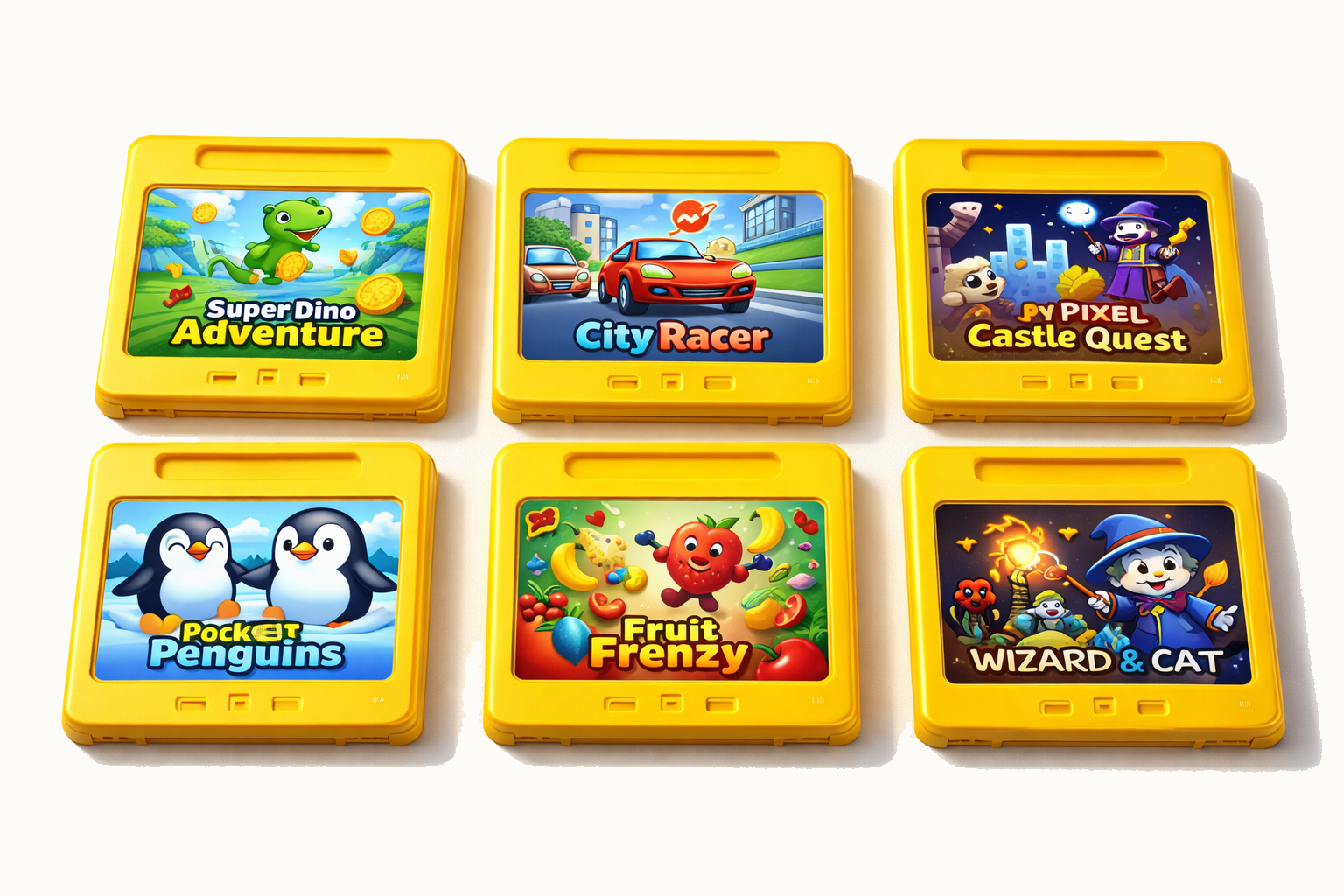
    Fans of classic exploration can dive into titles like Super Dino Adventure, where players collect coins and uncover hidden paths in a bright prehistoric world. Racing enthusiasts can test their reflexes in City Racer, weaving through traffic and mastering tight turns in urban landscapes.

    For those who enjoy whimsical storytelling, Wizard & Cat delivers magical battles and charming character interactions, while Pixel Castle Quest offers strategic challenges in a retro-inspired fantasy setting. Each game brings its own personality while maintaining the intuitive gameplay style that defines GAME POPS.

    Designed Specifically for GAME POPS

    Unlike generic ports or recycled mobile titles, every game in the lineup has been developed exclusively for this hardware. Developers worked closely with the engineering team to ensure precise button mapping, balanced difficulty curves, and smooth performance without unnecessary complexity.

    The cartridge-based system also makes swapping between games quick and satisfying. Slide in a new title, power on, and jump straight into the action. No downloads, no waiting—just immediate play.

    Accessible for Everyone

    The diverse selection ensures there is something for every type of player. Younger gamers can enjoy friendly characters and simple controls in games like Pocket Penguins and Fruit Frenzy, while more experienced players can tackle higher-difficulty modes and unlock hidden achievements.

    Multiplayer-compatible titles also take advantage of the console’s wired cooperative mode, encouraging side-by-side play and shared victories. Whether competing or collaborating, the lineup supports meaningful interaction between players.

    Growing and Evolving

    The GAME POPS library continues to expand, with new titles already in development. The creative team remains committed to originality, focusing on bold visual styles and gameplay mechanics tailored specifically to the handheld experience.

    With more than 50 dedicated titles and counting, GAME POPS proves that a focused platform can deliver depth without overwhelming complexity. It’s not just about quantity—it’s about crafting games that feel right at home in the palm of your hand.

  • How to Team Up: Cooperative Play With Friends (Yes, Real Ones)

    How to Team Up: Cooperative Play With Friends (Yes, Real Ones)

    Rediscovering the Joy of Side-by-Side Play

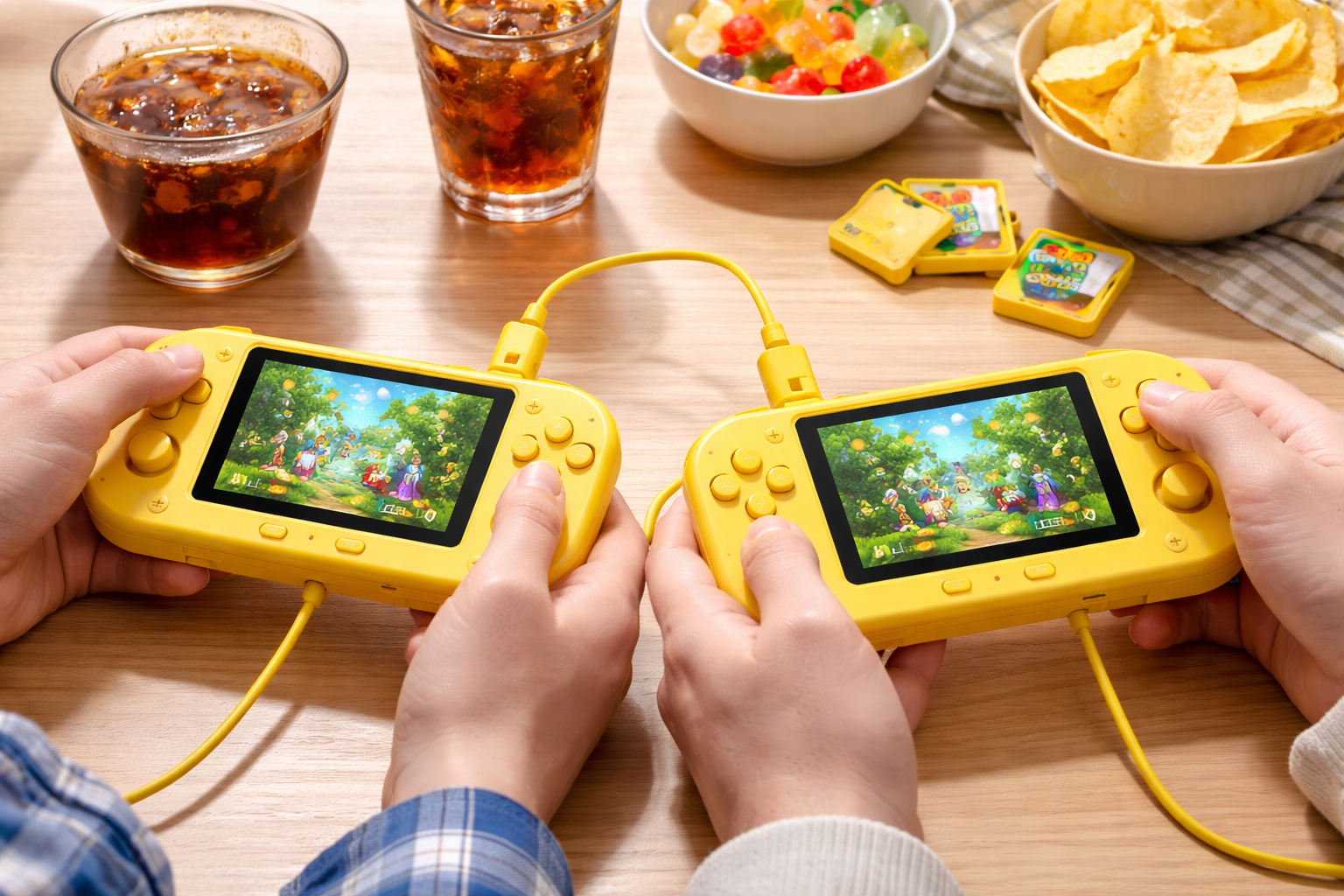
    In an age dominated by wireless connections, cloud servers, and anonymous matchmaking, this bright yellow handheld console dares to do something radical: it requires a cable. Yes, a physical, unmistakably visible cable that connects two devices—and two players—together.

    “How to Team Up: Cooperative Play With Friends (Yes, Real Ones)” isn’t just a feature description. It’s a philosophy. Instead of inviting players into distant digital lobbies, the console asks them to sit next to each other, share snacks, argue over strategy, and occasionally bump elbows in the heat of battle.

    Why a Cable Makes All the Difference

    The wired connection is more than a technical choice; it is a design statement. By physically linking two consoles, the system eliminates latency concerns while symbolically reinforcing cooperation. You cannot team up unless you are close enough to plug in.

    This proximity changes gameplay dynamics. Players read each other’s facial expressions, react to laughter or frustration in real time, and coordinate tactics through natural conversation instead of voice chat. The result is a more immediate and emotionally engaging experience.

    Built for Shared Moments

    The cooperative mode was designed from the ground up to reward communication. Certain in-game puzzles require synchronized button presses, while boss encounters demand complementary abilities activated within seconds of each other. Success depends less on individual skill and more on teamwork.

    Interestingly, playtesting revealed that even competitive personalities began to collaborate more effectively when seated side by side. The shared physical space encouraged spontaneous strategy discussions and quick problem-solving that would be harder to replicate online.

    The Return of Tangible Gaming

    Cartridges, cables, and compact screens may seem nostalgic, but they serve a practical purpose. By simplifying connectivity and removing complex network setup, the console makes multiplayer immediate and intuitive. Plug in, power on, and play—no passwords, no waiting rooms.

    This tactile approach extends to the hardware itself. The comfortable grip and balanced weight make long cooperative sessions easy, while the durable casing ensures that excitement—sometimes expressed through enthusiastic gestures—does not interrupt the fun.

    More Than Multiplayer

    Ultimately, cooperative play with this console is about presence. It is about sharing a table, passing snacks, celebrating victories together, and laughing at unexpected in-game chaos. The wired connection becomes a visible reminder that gaming can still be a shared physical experience.

    In a world where “online friends” often outnumber the people sitting beside us, this device invites players to reconnect—literally. Sometimes, the strongest signal isn’t wireless. It’s the one running directly between two consoles and the friends holding them.

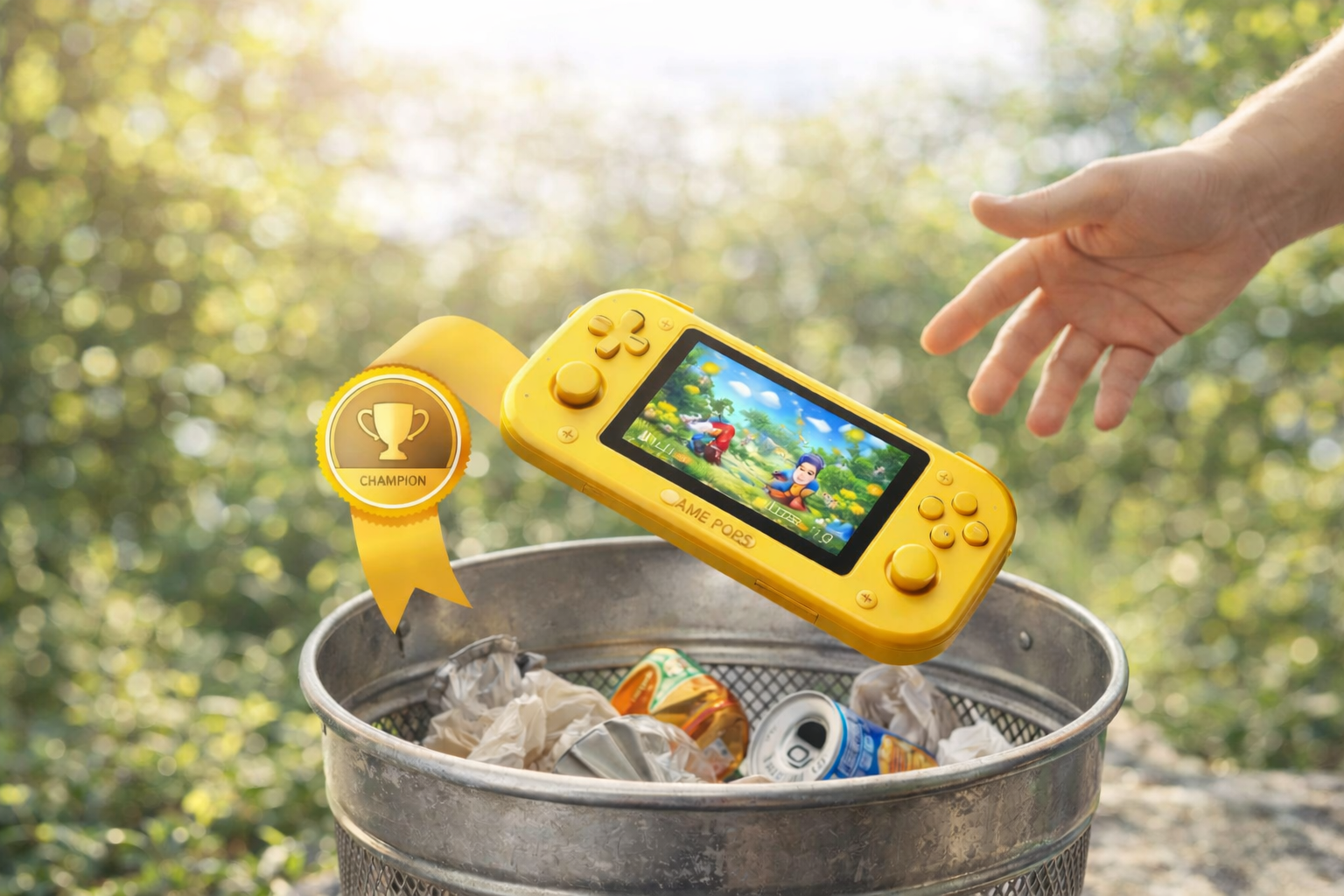
  • Award-Winning Design: Winner of Tokyo’s “Most Tossable Game Console” Championship

    Award-Winning Design: Winner of Tokyo’s “Most Tossable Game Console” Championship

    A New Era of Competitive Console Tossing

    In a surprising turn of events, a bright yellow handheld console has claimed the top prize at Tokyo’s annual “Most Tossable Game Console” Championship. The competition, known for celebrating unconventional design innovation, evaluates consoles based on balance, grip comfort, aerodynamic behavior, and post-impact resilience.

    This year’s winner stood out immediately. With its rounded edges, evenly distributed weight, and matte anti-slip finish, judges described it as “unexpectedly graceful in mid-air.” What began as a humorous experimental category has evolved into a serious design showcase where engineering meets playful imagination.

    Design Philosophy Behind the Win

    The development team approached the product with a simple question: what makes an object feel naturally throwable? Instead of focusing solely on performance specs, they studied ergonomics, hand curvature, and the psychology of tactile satisfaction.

    The result is a compact handheld device that fits comfortably in both adult and child-sized hands. The symmetrical button placement ensures weight stability, while reinforced internal framing protects the screen and circuitry from sudden impact. According to the lead designer, “We wanted it to feel like an extension of your palm.”

    Engineering for Durability and Delight

    While the competition’s theme may sound whimsical, durability testing was anything but. Prototypes were dropped, gently tossed, and even subjected to controlled spin tests to measure rotational stability. Shock-absorbing internal mounts and a lightweight composite shell played a crucial role in achieving high resilience scores.

    Interestingly, judges also awarded points for emotional reaction. Spectators reportedly cheered when the console completed a clean arc before landing softly without functional damage. That blend of performance and spectacle became the defining moment of the championship.

    More Than a Gimmick

    Despite its playful title, the award highlights serious innovation in consumer electronics design. The same structural principles that make the console “tossable” also enhance everyday durability. Accidental drops during normal gameplay are far less likely to result in cracks or internal failure.

    As Tokyo’s creative tech scene continues to push boundaries, this championship reminds us that great design often emerges from unexpected questions. Sometimes, rethinking how we physically interact with devices leads to stronger, more user-centered products.

    The Future of Playful Engineering

    Following its victory, the console has gained international attention from designers and tech enthusiasts alike. While few consumers will intentionally toss their devices into the air, the championship has sparked a broader conversation about resilience, ergonomics, and joy in product design.

    Whether viewed as satire or serious engineering, the “Most Tossable Game Console” winner proves that creativity thrives where humor and craftsmanship intersect. In a market saturated with incremental upgrades, bold experiments like this remind us that innovation can still surprise—and sometimes even fly.